

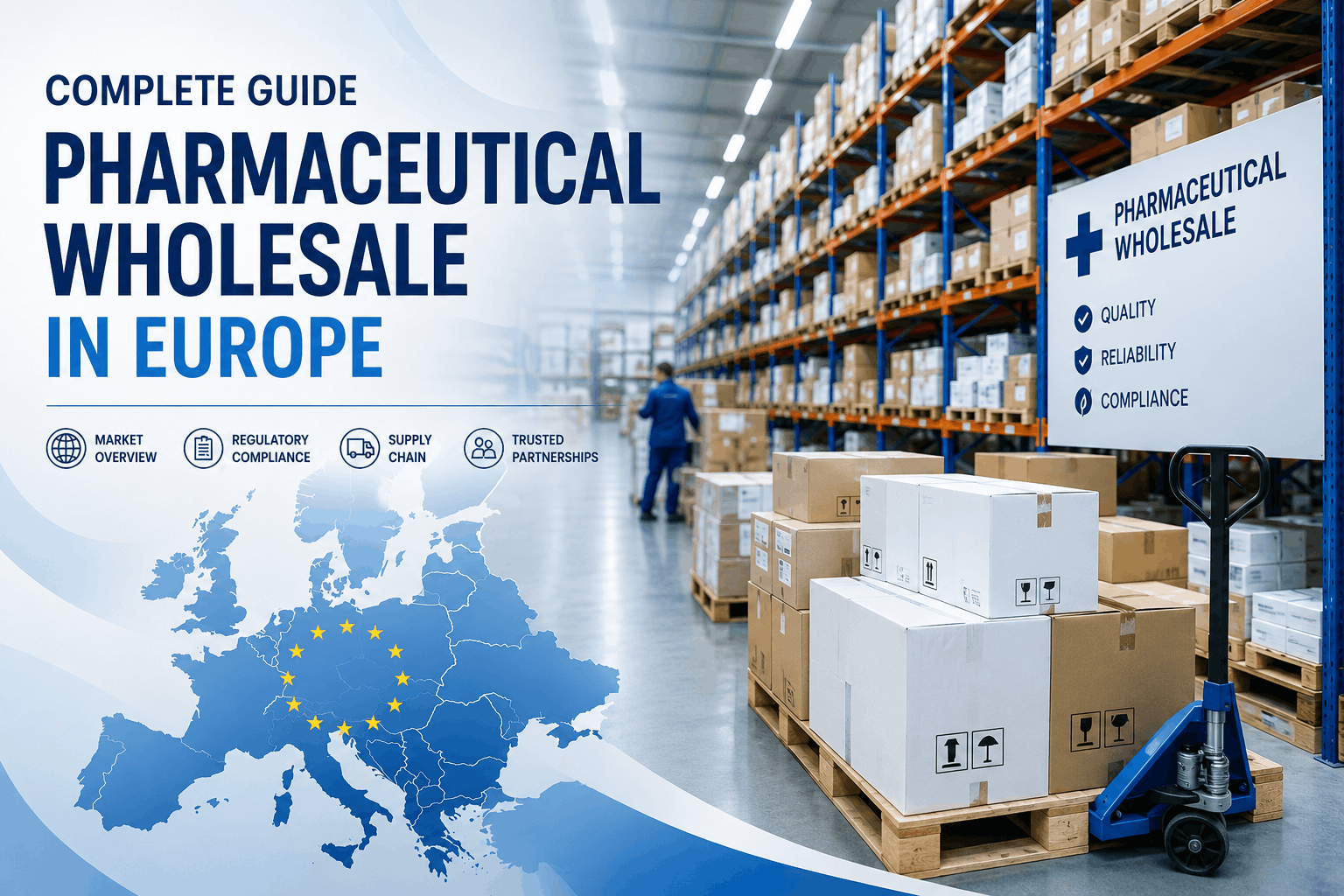
Understanding How Pharmaceutical Distribution Works in Europe
The European pharmaceutical supply chain is built around control, traceability, and regulatory accountability. Unlike many international markets where speed and commercial flexibility dominate operations, the EU system prioritizes product integrity at every stage of movement.
Before a medicine reaches a pharmacy, hospital, or distributor, it passes through multiple regulated checkpoints involving manufacturers, wholesalers, logistics providers, and national authorities. Every transfer must be documented, every storage condition monitored, and every batch traceable.
This structure exists because pharmaceutical products in Europe move within a highly regulated environment shaped by patient safety requirements, anti-counterfeit legislation, and strict quality standards.
Today, the EU pharmaceutical market handles everything from common generic medicines to temperature-sensitive oncology therapies, biologics, and rare disease treatments. Many of these products require controlled transportation and storage conditions throughout the supply chain.
As a result, pharmaceutical wholesale in Europe is not simply about moving products from one location to another. It is about maintaining compliance and product quality throughout the entire distribution process.
The Structure of the EU Pharmaceutical Supply Chain
At a basic level, the supply chain appears simple:
Manufacturer → Wholesaler → Pharmacy/Hospital
In practice, the operational structure is far more complex.
A single pharmaceutical product may:
- Move across multiple EU countries
- Pass through more than one licensed wholesaler
- Be redistributed depending on regional demand
- Undergo controlled return procedures before re-entering stock
This complexity exists because the European Union operates as a connected regulatory framework rather than a fully centralized pharmaceutical market. Each country maintains its own:
- Pricing systems
- Reimbursement structures
- Procurement processes
- Healthcare distribution networks
At the same time, all member states must comply with shared EU pharmaceutical regulations.
This combination creates a market where cross-border pharmaceutical movement is common, but heavily controlled.
Key Participants in the European Pharmaceutical Distribution System
Manufacturers
Manufacturers are responsible for product release, quality certification, and initial supply chain authorization.
Before products enter distribution channels, manufacturers must ensure:
- Batch certification is completed
- Quality documentation is available
- Approved distribution pathways are defined
- Storage and transportation requirements are established
Many pharmaceutical manufacturers appoint licensed wholesale partners across Europe instead of managing regional distribution internally. This approach allows companies to work with distributors already familiar with local compliance requirements and logistics infrastructure.
Pharmaceutical Wholesalers
Licensed pharmaceutical wholesalers play a central role in maintaining supply continuity across Europe.
Their responsibilities extend far beyond warehousing and product dispatch.
Daily wholesale operations typically include:
- Supplier qualification and verification
- Controlled pharmaceutical storage
- Batch-level documentation management
- Order fulfillment
- Recall preparedness
- Return handling and quarantine management
- Verification of customer licenses
Under EU Good Distribution Practice (GDP) requirements, wholesalers must ensure medicines are stored, transported, and distributed under approved conditions at all times.
For example, returned pharmaceutical products cannot simply be placed back into inventory. Before restocking, wholesalers must verify:
- Storage conditions during transit
- Packaging integrity
- Traceability records
- Temperature compliance where applicable
This is one reason pharmaceutical wholesale in Europe functions more like a regulated quality system supported by logistics operations.
Importers and Exporters
Cross-border pharmaceutical trade within and outside Europe requires strict documentation and regulatory coordination.
Importers are responsible for verifying:
- Product origin
- Supplier authorization
- Compliance documentation
- Batch traceability
Exporters supplying markets outside the EU must also consider:
- Destination country regulations
- Export documentation requirements
- Product handling standards during international transport
For many pharmaceutical exporters, especially those dealing with oncology medicines or specialty products, logistics planning becomes as important as commercial planning.
Pharmacies and Hospitals
Pharmacies and healthcare institutions are expected to source medicines only from authorized suppliers.
Their responsibilities include:
- Maintaining proper storage conditions
- Participating in traceability systems
- Managing controlled product handling procedures
- Supporting recall execution when required
Because hospitals and pharmacies depend heavily on wholesalers for supply continuity, disruptions at the distribution level can directly affect medicine availability.
Why Compliance Plays Such a Critical Role
The European pharmaceutical sector operates under strict regulatory oversight because the risks associated with poor distribution practices are significant.
Over the years, EU authorities have introduced tighter controls to address issues such as:
- Falsified medicines entering legitimate supply chains
- Cold-chain failures
- Product tampering
- Cross-border traceability gaps
- Supply disruptions
As a result, the system is designed around three core principles:
- Accountability
- Traceability
- Product integrity
Every participant in the supply chain must be able to demonstrate control over the products they handle.
EU GDP Compliance in Real Operations
What Is GDP?
EU Good Distribution Practice (GDP) guidelines define how pharmaceutical products should be handled throughout the distribution process.
GDP requirements apply to:
- Warehousing
- Transportation
- Documentation
- Supplier qualification
- Recall systems
- Temperature monitoring
The goal is to ensure medicines remain safe and effective until they reach the patient.
Warehouse Requirements
A compliant pharmaceutical warehouse in Europe typically includes:
- Temperature-controlled storage zones
- Continuous monitoring systems
- Alarm and deviation management
- Segregated quarantine areas
- Controlled access procedures
Facilities handling biologics, vaccines, or oncology medicines often require additional cold-chain infrastructure.
Temperature excursions are treated seriously because even short deviations can affect product stability.
Transportation Standards
GDP compliance also extends to transportation activities.
Pharmaceutical logistics providers are expected to use:
- Qualified transportation systems
- Validated shipping procedures
- Temperature monitoring devices
- Route risk assessments
For cold-chain medicines, transportation failures can result in product rejection or recall.
For example, if an oncology shipment remains outside approved temperature conditions during customs delays, the entire batch may require quality assessment before release.
Entering the European Pharmaceutical Market
Choosing an Entry Strategy
Companies entering the EU pharmaceutical market generally follow one of three approaches.
1. Direct Market Entry
This involves establishing an EU-based operation and obtaining a Wholesale Distribution Authorization (WDA).
Advantages:
- Greater operational control
- Direct customer relationships
- Long-term scalability
Challenges:
- Higher setup costs
- Regulatory complexity
- Infrastructure requirements
- Inspection readiness obligations
This route is usually preferred by businesses planning long-term European operations.
2. Partnering with an EU Wholesaler
Many non-EU manufacturers work with existing licensed distributors.
This approach reduces:
- Initial infrastructure investment
- Compliance setup burden
- Local operational complexity
However, distributor selection becomes extremely important because:
- Product handling standards vary
- Compliance quality differs between partners
- Market reputation depends on operational execution
3. Hybrid Distribution Models
Some companies maintain commercial control while outsourcing warehousing and logistics to third-party GDP-compliant providers.
This model offers flexibility but requires strong coordination between:
- Internal quality systems
- External logistics partners
- Documentation workflows
Without proper oversight, traceability gaps can emerge.
Licensing Requirements in Europe
Wholesale Distribution Authorization (WDA)
A company cannot legally operate pharmaceutical wholesale activities in the EU without appropriate authorization.
Authorities typically evaluate:
- Facility suitability
- SOP documentation
- Quality management systems
- Staff qualifications
- Storage controls
- Compliance procedures
One of the most important requirements is appointing a Responsible Person (RP).
The RP oversees:
- GDP compliance
- Regulatory communication
- Operational oversight
- Inspection readiness
This is a legally accountable position within pharmaceutical distribution operations.
Documentation and Traceability
Documentation is one of the most important operational pillars in EU pharmaceutical distribution.
Businesses must maintain records covering:
- Procurement
- Batch movement
- Customer verification
- Storage conditions
- Returns
- Product recalls
Traceability systems must allow companies to identify:
- Where products originated
- Where they were distributed
- Which batches were affected during recalls
During inspections, regulators often compare documented procedures against real operational activity. Gaps between written processes and actual execution are considered serious compliance concerns.
Product Registration and Market Access
Before medicines can be distributed within Europe, products must be appropriately authorized.
Depending on the product and target market, approval pathways may include:
- Centralized EU authorization
- Decentralized procedures
- National approvals
These processes involve submission of:
- Quality data
- Safety information
- Efficacy documentation
- Manufacturing details
Packaging and labeling requirements also vary between countries, particularly regarding local language obligations.
In some cases, pharmaceutical products require relabeling or repackaging before entering specific markets.
Operational Challenges in EU Pharmaceutical Distribution
Even well-established distributors face operational pressure in the European market.
Common challenges include:
- Cold-chain management
- Supply shortages
- Regulatory updates
- Cross-border coordination
- Documentation accuracy
- Product recalls
- Inventory balancing across regions
One operational issue can quickly affect multiple stakeholders across the supply chain.
For example:
A documentation discrepancy during transportation may delay customs clearance, which can then create temperature-related product risks for sensitive medicines.
This is why pharmaceutical distribution businesses invest heavily in:
- Process consistency
- Staff training
- Monitoring systems
- Quality oversight
Common Mistakes New Entrants Make
Treating Compliance as a One-Time Project
Many businesses focus heavily on obtaining licenses but underestimate ongoing operational discipline.
In reality, compliance must be maintained continuously.
Weak Documentation Practices
Incomplete records remain one of the most common reasons for regulatory observations during inspections.
Even when operations are handled correctly, poor documentation can create serious compliance issues.
Choosing Distribution Partners Too Quickly
Not all wholesalers maintain the same operational standards.
Poor partner selection can affect:
- Product integrity
- Market reputation
- Regulatory standing
Scaling Too Fast
Some companies attempt multi-country expansion before stabilizing their initial operations.
This often creates:
- Process inconsistency
- Training gaps
- Supply chain visibility issues
In pharmaceutical distribution, stable systems usually matter more than rapid expansion.
Frequently Asked Questions (FAQs)
Is the EU pharmaceutical wholesale market difficult to enter?
The challenge is not understanding the process — it is maintaining operational discipline after entry.
Most businesses can prepare applications and documentation. The real difficulty comes from sustaining compliance under daily operational pressure.
Can small companies enter the EU market?
Yes. Many successful pharmaceutical businesses begin with:
- One country
- Limited product categories
- Controlled distribution models
Expansion usually becomes easier after operational systems stabilize.
How important is cold-chain management?
Cold-chain control is critical for many modern therapies, including biologics and oncology medicines.
Even short temperature deviations can compromise product quality and trigger regulatory action.
What happens during a GDP inspection?
Inspectors typically evaluate:
- Facility conditions
- Documentation systems
- Staff awareness
- Operational consistency
- Traceability processes
Authorities often focus on whether actual operations match written procedures.
How are product recalls handled?
A compliant recall system should allow businesses to:
- Identify affected batches quickly
- Trace product movement
- Contact customers immediately
- Retrieve products efficiently
Recall readiness is considered a core GDP requirement.
Final Perspective
The European pharmaceutical market rewards businesses that prioritize operational consistency, documentation discipline, and long-term compliance.
Success in this sector rarely comes from moving quickly. It comes from building systems that remain reliable under pressure.
Companies that invest in:
- strong quality systems
- controlled logistics
- trained operational teams
- transparent documentation
are generally better positioned to build sustainable pharmaceutical distribution operations across Europe.
Over time, that operational credibility becomes one of the most valuable assets a pharmaceutical business can develop in the EU market.